

Monday, October 26, 2009
 In the Bedroom is a 2001 film, based on the short story "Killings" by Andre Dubus. I don't recall anyone mentioning it, but definitely another one we should include as a top palliative care movie.
Frank Fowler is a young man spending the summer with his parents in Maine before he heads off to graduate school. He meets an older woman, Natalie, with two children and a violent ex-husband. Although he tells his mother this is just a summer fling, he seriously contemplates staying and taking a year off school.
He has just made the decision to go back to school when he is shot and killed by Natalie's ex-husband. The remainder of the film focuses on his parents, Ruth and Matt, as they try to pick up the pieces of their lives after the murder of their only child. This is made much more difficult when Frank's murderer gets out on bail and they see him walking around town, smiling at them. They find out that he will likely only be charged with manslaughter, as he claims the shooting was an accident. This pushes Matt and Ruth emotionally over the edge. We see a little of what ordinary people might be capable of in a very bad situation. I won't ruin the ending.
I really loved this movie. I loved that I felt we got to know and like Frank before he died. Although the movie was about the aftermath of his death, I felt that he was a main character from the beginning and remained a main character even after he was gone.
I loved the pace of this movie. It very slowly and carefully puts the story together and I think it makes it more real. It mixes in a lot of short scenes that at the time seem insignificant but aren't really. After Frank's death, the pace seems to slow down more, like the pace of grief. It does build to a climactic sort of ending, but after the action is over, it slows back down again. You see Matt in bed and Ruth yelling up to see if he wants coffee, just so normal.
The majority of the film deals with grief and the process by which these two people are trying to move through it. You see profound sadness, anger, guilt, blame, all the emotions you might expect. At first no one is talking to anyone. Just a lot of silent evenings in front of the TV. Then there are big blowups and finger pointing. The grief seemed very realistic to me. Ruth has an eloquent description of grief. "It comes in waves. And then nothing. Like a rest in music. No sound but so loud." (I loved the writing in this movie. Like poetry.)
So what's with the title? It seems provocative at first glance. (Again, I love the writing. So clever.) At the beginning of the film (in one of the scenes that seemed insignificant at the time), Matt, Frank and one of Natalie's children are out on a boat, trapping lobster. They find one with only one arm and this is how Matt explains what happened. "See the trap has nylon nets called heads. Two side heads to let the lobster crawl in and inside what they call a bedroom head to hold the bait and keeps them from escaping. You know the old saying twos company threes a crowd? Well, it's like that. You get more than two of these in the bedroom and chances are something like that's going to happen."
Monday, October 26, 2009 0
Monday, October 19, 2009
 Heartwarming movies are always a plus for me. Add to this a documentary with good end of life themes and I'm snagged.
Young@Heart (2007) is just this. It is a documentary about a singing group in Massachusetts who covers such artists as Coldplay, Sonic Youth and James Brown. The twist is that the average age of the members in the group is 81.
The movie follows the group of 24 for 6 weeks through a series of rehearsals and performances. Intermixed through the rigors of learning new songs like "Schizophrenia" by Sonic Youth, are laughable moments and trials from the health issues of chorus members.
The lessons in the film are abundant, and most center on how to make "living" more worthwhile. The singers have a sense of purpose with the group, they feel their minds are sharper as they learn and memorize songs and the necessity of being with other people during the day helps them live longer, more quality lives.
The most poignant moment for me was the night of the concert. One of the members had died, and the soloist himself is in poor health. His oxygen hisses in bursts as he sings Coldplay's "Fix you". The lyrics, which were written portraying the emotions of the death of someone dear, strike a different feeling sung by a group so familiar with death and so close to death.
The chorus member sings, "And the tears come streaming down your face/When you lose something you can't replace/When you love someone but it goes to waste/Could it be worse?"
I especially like the realness of this film. Aging is not hidden, the real battles of poor health, memory loss and death are present, however life is celebrated at all times. When I think of palliative medicine being about living life to its fullest, this movie represents that to a tee.
Following is the trailer of the film from YouTube, if the link doesn't appear as a subscriber, head to the original post to see. Also follow this link directly to Youtube to see the performance of "Fix You" I spoke of earlier.
Monday, October 19, 2009 2
Monday, October 12, 2009
 When most people think of Stephen King, they think of killer cars, haunted hotels, and prom nights gone wrong. Palliative care isn't generally the first thing that comes to mind. I don't usually read Stephen King as I'm not a big fan of the horror genre. When I read "The Woman in the Room" my first thought was that King had moved away from horror for this short story. But on second thought, I think it is actually a movement from supernatural horror to a real life type horror. (The picture is from the short film made in 1983.)
John is a loving son dealing with his mother's terminal cancer and severe pain issues. It is written in the third person and most of the story is like a description of an internal dialogue as John is trying to make a difficult choice. He has found a bottle of "Darvon Complex"(propoxyphene with aspirin) in his mother's medicine cabinet and he is wondering if he could end all of her suffering.
Things get worse when she is admitted to the hospital for pain control. She has a procedure that he calls a 'cortotomy' in which a needle is placed into the pain center in the brain and that area is "blown out"(This story was written in the '70s.). This procedure leaves her paralyzed but still in pain. John continues to toy with thought of giving her the pills as he visits her daily.
"She imagines the pain. But it is nonetheless real. Real to her. That is why time is so important. Your mother can no longer count time in terms of seconds and minutes and hours. She must restructure those units into days and weeks and months." What does the doctor mean when he says this? Prepare for the long haul? Since the pain is so bad, don't focus on the now, focus on the future?
John carries the pills around with him for awhile. He tells no one of his plan. He tries to talk himself out of it. If she has a roommate, then he'll be off the hook. If she says anything about the pills he gives her, he'll just put them back. In the end, everything falls into place. He gives her six Darvon tablets and then leaves the hospital to wait for the phone call.
I'll pretend for the sake of this post that six Darvon is a fatal dose. (Although I'm doubtful that it would cause any more than ringing in the ears (from the aspirin). But I'll admit that I've never given anyone six Darvon to know.) I'm not writing about this story to endorse John's actions or judge him either way but to acknowledge the sentiment. I have often heard "Isn't there something we can give that will make this go faster?" and "It's not fair. If my dog was suffering we could put it out of it's misery, but we can't do that for my mom?" It comes up so frequently I would categorize it as a very normal feeling.
It seems King's inspiration for the story may have come from his own life.
"Perhaps it is his fault anyway. He is the only child to have been nurtured inside her, a change of life baby. His brother was adopted when another smiling doctor told her she would never have any children of her own. And of course, the cancer now in her began in the womb like a second child, his own darker twin. His life and her death began in the same place: Should he not do what the other is doing already, so slowly and clumsily?"
King also has only one brother, who was adopted, and his mother died from uterine cancer in 1974. He is also reported to have had drinking problems around the time of his mothers death, another similarity to John in the story.
Works referenced:"The Woman in the Room" Night Shift by Stephen King.
Monday, October 12, 2009 3
Monday, October 5, 2009
 I saw my first Opera, Puccini's "Madame Butterfly", at the age of 9. Instantly mesmerized by the music, I was a bit shocked that Butterfly dies in the final scene. Where was the happy ending I was used to in Hollywood films?
Unbeknownst to me at the time, tragedy and death are common in opera. In fact, some would say that opera as an art form is obsessed with death, and has been since its inception. The first known operatic works of "Euridice" (1600) and "L'Orfeo"(1607) both have tragic deaths, with Euridice stepping on a venomous snake and dying, and Orfeo searching for his beloved in Hades, finding her and then having her vanish from his sight for eternity.
Many feel that part of the obsession has to do with the cultural beliefs surrounding death in the 18th and 19th centuries, when most operas we enjoy today, were written. It was in the 18th century that death began to be viewed not as a natural fate, but traumatic rupture. This morbid fascination with death became a part of the romanticism of the 19th century. It is no surprise then that this time frame produced such death themed classics as Carmen, La Traviata, Rigoletto, Aida, Tosca, La Bohème, Madama Butterfly, and The Tales of Hoffmann.
To our death defying culture, it seems strange that not only are operas packed with people dying, but the deaths don't hold the same negativeness or sadness that we're used to. The deaths portrayed seem more about redemption, reunion, and transcendence. This romanticized view of dying becomes a thing of beauty, in line with the Greek belief of kalos thanatos (beautiful death).
These beautiful deaths, however, are not just a form of art, composers such as Richard Wagner tried to live it. He wrote to a friend:
"We must learn to die, and to die in the fullest sense of the word. The fear of the end is the source of all lovelessness; and the fear is generated only when love begins to wane. How came it that...all that mankind did, ordered, and established, was conceived only in fear of the end!"
As byproduct of the death centered operas we get to enjoy haunting aria's given to the heroes or heroines, often contemplating death or mourning a life lost. Perhaps one of the most famous is the final aria from Aida, "O Terra Addio"
In this opera by Giuseepe Verdi, the heroine Aida is an Ethiopian princess who falls in love with her enemy Prince Radames. As punishment Radames is sentenced to be buried alive unless he denounces his love for Aida. He refuses and in the final scene we find that Aida has snuck into the tomb to be buried alive with him. They sing together "O Terra Addio" the lyrics below:
Farewell earth, farewell valleys of tears. Dreams of joy that vanish in grief. Heavens open to us, wandering souls who fly to the rays of eternal day.
You can see this song on Youtube as sung by Placido Domingo and Aprlie Millo at the end of this post. Visit the main pallimed arts site if the link doesn't appear.
The prevalence of dying in opera is so common, that now when I attend the opera I glance at the synopsis not wondering if their will be death, but how much and in what dramatic fashion.
Monday, October 5, 2009 1
Monday, September 28, 2009
The nice thing about art is the ability to interpret a piece from your own perspective based on your life experiences and knowledge. Tonight I will attempt a great feat by turning a song about being left alone and ignored on the dance floor into a reminder of the importance of respect in caring for patients.
The Ting Tings released "That's Not My Name" in 2008 and it quickly spread through MySpace and eventually the UK Charts to become a dance club anthem. The catchy yet slightly bratty lyrics feature a frustrated woman who despises being forgotten and never having anyone identify her as someone of worth. The big bass drum beat and hand claps in the opening verse give the song a cheerleading type quality matched by lead singer Katie White's chanting style of singing.
The dramatic pause of music allows the full weight of the lyrics sink in: "With nothing to consider, they forget my name (ame, ame, ame)" the final words like a pitiful echo chamber resonating the isolation the singer feels.
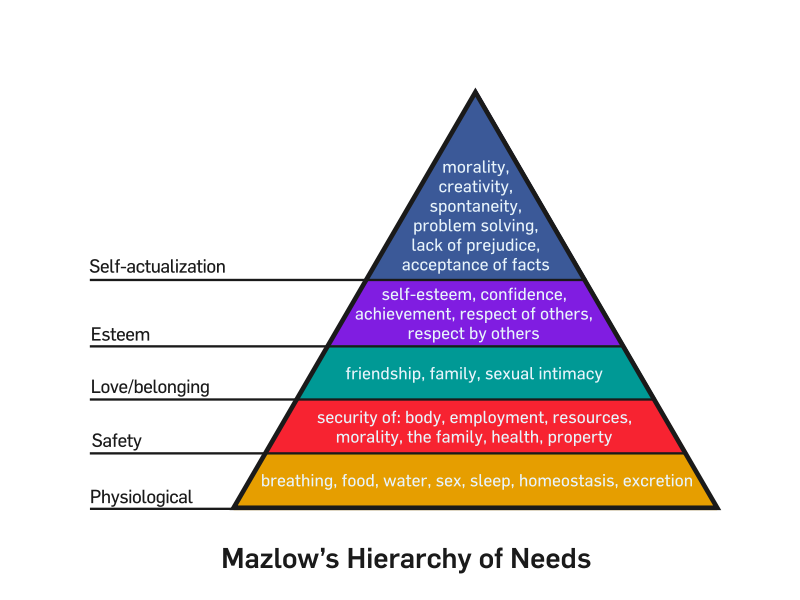
Taking into consideration Mazlow's Hierachy of Needs this song clearly fits into Esteem but also has roots in the Love and Belonging level. One could also consider it as 'continuity of self' and 'maintenance of pride' in Chochinov's Dignity Conserving Perspectives model. (free full text) For the patient with a potential life-altering illness it is difficult to consider being able to 'accept facts' under self actualization if everything in the medical system is designed to dehumanize you one interaction at a time.
The obvious dehumanizing example in the hospital is defining patients not by their name but by age, gender and illness and location as in: "the 54 year old female with lung cancer in the ICU." In addition the gigabytes of data, text and images which define a patient via their ever expanding medical chart (paper or digital) serve a similar dehumanizing role.
Two questions I find very helpful in making a stronger connection with patients include asking about name preference and correct name pronunciation. "Do you like/prefer to be called ______?" "What do your friends call you?" are two easy ways to address name preference. Even if it is classically a term of affection like 'Doll'* or a family relation like 'Gramps' if that is the patients preference even for staff to address them I go with it. (*except when it is not a term they choose themselves - see Elderspeak below)
Correct name pronunciation is probably one of my biggest social pet peeves in medical care today. It flabbergasts me to find highly skilled and well educated professionals stop short of pronouncing a potentially difficult name; often times it may come from a culture different than the majority of staff. If you are going to take a patient for a cholejejunostomy, colonoscopy, phlebotomy, computerized tomography, sunitinib or a palliative extubation you can surely spend 30 seconds to understand how to correctly pronounce their name be it Lee Thi Nguyen or Wilhelmina Van Rijn (not patients of mine)
Another aspect is the singer's identification of personality which also is easily reframed to a patient navigating a complex illness. How the medical system views a patient maybe 'she's quiet' but to the person with the illness she may consider herself in better times 'a riot.'
And lastly the refrain "Are you calling me darling? Are you calling me bird?" resonates with current research in geriatrics demonstrating the use of Elderspeak has a demoralizing effect in geriatric patients. Although calling a patient 'darling,' 'doll' or 'bird' may seem endearing it too becomes another way to dehumanize and individual by tagging them with a generic nickname.
I have left a few other gems in the lyrics for you to interpret on your own. Tell me if you hear some of the same themes when you listen to "That's Not My Name."
"That's Not My Name" by The Ting Tings (Columbia Records UK-2008)
Lyrics:
Four little words just to get me along
It's a difficulty and I'm biting on my tongue and I
I keep stalling, keeping me together
People around gotta find something to say now
Holding back, everyday the same
Don't wanna be a loner
Listen to me, oh no
I never say anything at all
But with nothing to consider they forget my name
(ame, ame, ame)
They call me 'hell'
They call me 'Stacey'
They call me 'her'
They call me 'Jane'
That's not my name
That's not my name
That's not my name
That's not my name
They call me 'quiet'
But I'm a riot
Mary-Jo-Lisa
Always the same
That's not my name
That's not my name
That's not my name
That's not my name
I miss the catch if they through me the ball
I'm the last kid standing up against the wall
Keep up, falling, these heels they keep me boring
Getting glammed up and sitting on the fence now
So alone all the time at night
Lock myself away
Listen to me, Oh nah.
Although I'm dressed up, out and all with
Everything considered they forget my name
(ame, ame, ame)
Male background singing:
Song was my in my head and now its in my mind
call the preacher, get some words and get some time
You know I realized. I cannot emphasize
Sitting around with just a promise, nothing binding
Whatever, can't you see? Living so desperately
Standing and choking like a vocal one-liner
Instead of sing-along this song is monotone
I gotta get some soul. I gotta get some feeling
They call me 'hell'
They call me 'Stacey'
They call me 'her'
They call me 'Jane'
That's not my name
That's not my name
That's not my name
That's not my name
They call me 'quiet'
But I'm a riot
Mary-Jo-Lisa
Always the same
That's not my name
That's not my name
That's not my name
That's not my name
Are you calling me darling?
Are you calling me bird?
Are you calling me darling?
Are you calling me bird?
 Williams KN, Herman R, Gajewski B, & Wilson K (2009). Elderspeak communication: impact on dementia care. American journal of Alzheimer's disease and other dementias, 24 (1), 11-20 PMID: 18591210
Monday, September 28, 2009 0
Monday, September 21, 2009
 Having had many talks with families recently about the end of life phenomenon of terminal delirium or terminal restlessness, I wondered how this concept had been depicted visually in art. As with other gallery themes we've done on pain, the last breath and afterlife, I've scoured the Internet in search of interesting art.

 In the digital art/photography world is this piece by Luis Iga entitled "Restless". There is a face and some hands, but also the distinct impression of movement and disorientation. The distortion present again reminds me of that confusion and even hallucinations that accompany terminal delirium.
 I will always try to find a sculpture as a part of these themed gallery posts. I did come across a sculptor by the name Lubomir Tomaszewski. His work often is inspired by nature and he even will incorporate rock and wood. I found this one labeled "Restless Spirit" which certainly depicts the movement associated with being restless.
 It is always difficult to express a subjective experience visually.
Although all these works are entitled "Restless" adding in the idea of terminal restlessness would add another layer to the the visual experience. I couldn't, however, find any art work with the title "Terminal Restlessness"...perhaps one of our readers could be the first!
Monday, September 21, 2009 2
Monday, September 14, 2009
 There is a vampire craze sweeping the nation. Can you think of a fictional monster that has been represented more in television, movies and books than the vampire? This isn't a new thing. From Dracula to Edward, vampires have been popular fiction for some time. It seems that new series are popping up all the time. The vampire is more and more becoming an icon of pop culture.
Before you think I'm being critical of this trend, here's my confession. I admit to watching True Blood. And perhaps I've read the books it is based on. I might also have read a little of Twilight...and the three other books of the series. I may have taken a day off work to see the Twilight movie the day it came out. It's a sickness, I know. I'm not the only one who has it. What is it that we see in these fictional beings? I mean, let's be honest, not exactly the most original stories out there. Mysterious, tormented vampire boy meets human girl. A difficult relationship ensues. That describes most of them.
There are a lot of different aspects to vampire lore that the media explores. Do they melt in the sunlight or just sparkle? Holy water? Crosses? Wooden stakes? There is a lot of variations out there. But one thing all the vampires do have in common is immortality. Is this the draw?
In a time of plastic surgery and anti-aging creams, it's not that surprising that we find the forever young and beautiful an interesting concept. In a society that often fears death, living forever seems alluring. This immortality is often depicted as a trade off for ones soul and bought at the expense of other's lives (drinking blood and all that). (I wonder how many people would trade their souls (or humanity, if you will) to be forever young and beautiful?)
I think what brought up this post now was a recent pondering of what the draw was for me. I am around death all day long. I wouldn't say I fear death (not as long as there is a good palliative care team around to adequately control my symptoms) or growing older. I never came up with a good philosophical answer. Probably just the romance and mystery paired with sexy actors, like everyone else. I tend to over think things.
Monday, September 14, 2009 0
Monday, September 7, 2009
 Bringing food to neighbors or friends after a death is a custom still seen as a part of our grieving practices. It may have started with the ancient rituals of bringing food for the deceased. In Egyptian history it was expected that the dead were given bread, beer, birds and beef. Even now, in Tibet, at all the Buddhist monasteries you will find piles of food gifts for the former Lamas.
The cultural and regional differences abound for what people typically bring. Fried chicken in the South and Jello salad's in the North. There are even names associated with foods like funeral beans, funeral potatoes and funeral pie.
Looking for some music on the subject? Kate Campbell actually wrote a folk song about funeral food. It's on her 2007 release "Sing Me Out". The lyrics are below with a link to a YouTube video of a live performance. I must say it's a very catchy song. The actual song starts about a minute and 34 seconds in, if you want to skip the talking... and as always you can go to the main pallimed site if the link doesn't show up.
It's so good for the soul
Funeral food
Monday, September 7, 2009 2
Monday, August 31, 2009
 Henry Wadsworth Longfellow was born February 27th 1807. In 1831, he married Mary Storer Potter. In 1835, Mary had a miscarriage and died a few weeks later. Several of Longfellow's later works were influenced by his grief over this loss. One such work was "Mezzo Cammin" (below).
Half my life is gone, and I have let
The years slip from me and have not fulfilled
The aspiration of my youth, to build
Some tower of song with lofty parapet.
Not indolence, nor pleasure, nor the fret
Of restless passions that would not be stilled,
But sorrow, and a care that almost killed,
Kept me from what I may accomplish yet;
Though, half-way up the hill, I see the Past
Lying beneath me with its sounds and sights,--
A city in the twilight dim and vast,
With smoking roofs, soft bells, and gleaming lights,--
And hear above me on the autumnal blast
The cataract of Death far thundering from the heights.
Mezzo Cammin translates to middle journey. It comes from the opening line of The Divine Comedy. "Nel mezzo del cammin di nostra vita" ("halfway along our life's path") (Longfellow was the first American to translate The Divine Comedy and you could make parallels between the two poems.)
While poetry is definitely open to interpretation, I think this poem has a sad but still hopeful message. Longfellow sees that he has not accomplished all that he aspired to do in his youth. He attributes this not to any flaw in his character, but to "sorrow, and a care that almost killed", likely the death of his wife. But there is still hope that he may yet accomplish his goals.
Now, half way through his journey, he looks back at the Past. Maybe it's not so bad? "A city in the twilight dim and vast, with smoking roofs, soft bells, and gleaming lights." He looks up to the future and sees Death but it is far away.
When I first read this poem, my immediate impression was that Longfellow saw himself at a turning point in his life. He had been living with his grief for some time and he felt he could not be productive. It feels like he is passively looking behind him at the past and ahead to the future and seeing that he can still go on and accomplish what he has set out to do. He is starting to find hope again after a great loss. He sees (actually he hears) his end but this is far into the future. Realistic but not pessimistic.
Monday, August 31, 2009 0
(cross-posted from the Main Pallimed Blog)
For the many readers of Pallimed who have not commented on the any of the blogs (Main, Arts, or Cases) I would really encourage you to break your silence and be proud to say 'long time listener, first time commenter.' Here are some of the reasons why you should comment on blog posts:
1. Comments Are Peer-Review: Discussing a counter-argument to the original post helps balance the viewpoint and encourages the writer and other comments to better define the original point.
2. Comments Make a Community: By contributing you know are part of a small network of Pallimed commenters which provides a foundation for a growing community. Often times the commenters answer each other's questions before any Pallimed writer gets a chance to reply.
3. Comments Guide the Content: Sure blog topics are what we decide to write on, but how we decide to write on is influenced by great comments which open up new areas of interest.
4. Comments Are Currency: Comments help any blog writer realize they are not talking into thin air, which is what it feels like when you first press 'publish post.' And that currency can be cashed in as goodwill from any of the blog writers. If we get a request for more info or a favor from someone who comments often, we will be much more likely to reciprocate.
5. Comments Make a Better, Smarter Blog: Comments often lead to new resources, new links and new insights making the blog a better resource for everyone. Also like a huge crowd sourced editors desk, if you find a broken link, a misspelling, poor grammar, tell us. We'll fix it, then thank you for helping all future readers.
6. Comment Make you a Pallimed Author: Drew started this whole thing, but Thomas Quinn, Lyle Fettig and Christian Sinclair (me) all started out as commenters before becoming formal contributors.
Barriers to Commenting:
How to Comment on a Blog Post:
Pallimed has a comment function (at the bottom of each post) that allows you to give us feedback on each post. Just click on the "comments" link at the end of each post (the link usually tells you how many comments have been left so it says, e.g., "0 Comments" or "1 Comment").
Comments Policy: The editors of Pallimed reserve the right to remove any comments we deem offensive/hateful, mean-spirited, commercial, or in any other way inappropriate. This blog is intended to foster collegial, well-informed discussions about research and news relevant to clinicians working with patients facing severe/life-limiting diseases: it is not a forum for discussing individual cases or airing complaints or concerns about specific cases (whether from the clinician, patient, or family perspective). Such comments will be removed at the discretion of the Pallimed editors. Any posts older than 14 days are moderated to reduce spam.
We ask that you refrain from providing specific details about cases because of HIPAA restrictions. But if you want to discuss a case more broadly, that would be more appropriate.
Our full comments policy is here.
Monday, August 24, 2009
 Ronald Munson is a bioethicist who has worked for such esteemed organizations as the National Institutes of Health and the National Cancer Institute. He has also authored several non fiction books, as well as one of the most widely used medical ethics texts in the United States. His newest book "The Woman Who Decided to Die: Challenges and Choices at the Edges of Medicine" was published in 2009 by Oxford University Press.
When I read the prologue, describing that the flow of the book would be ten scenarios of real world moral dilemmas faced by Munson himself, I was pretty eager to jump in.
While the stories themselves were extremely well written and even page turning in their narrative form I was surprised with how common place I found them. I was expecting moral and ethical dilemmas that would spur hours of discussions amongst my colleagues. What I found were stories more geared to a non medical audience. For those of us in the trenches, these are a part of our daily experiences.
For instance, there was a 31 year old woman who opted to not pursue further chemo. Now it was a little edgy that she decided not to bring her husband into that decision, but I'm pretty used to people not wanting to pursue chemo, even if doctors know it will help or even with a chance of cure.
Another woman with a schizophrenic break, was a suicide risk and was committed against her will into a psych unit. Yep, pretty standard.
I'm probably sounding too critical. It is a very well written book, I just think it is my career in palliative medicine that skews the "wow" factor.
Probably the most interesting story I found was about an inmate who had been convicted of murder (that of a woman and her child), who was admitted from prison in need of a heart transplant. I did find myself wondering what the outcome would be, as different states have actually taken different approaches to this exact scenario. California has transplanted an inmate to the tune of an estimated cost of 2 million to the state, while as Arkansas denied a transplant to a inmate, who then died of liver failure. You'll have to read the book to see what Munson suggested at an emergency ethics meeting regarding this case.
This review would not be complete without mentioning the narrative I had the most trouble with. The story was of a man with throat cancer, who had communicated with family and friends that he wouldn't want to be kept alive if his quality of life was not an acceptable one. Things progressed, he had a final surgery which removed most of his tongue and half of his face (both upper and lower parts of his jaw) and was on life support after surgery. He was dying anyway of cancer, and his wife stepped up to advocate his wishes.
What happened next is what troubled me. In this situation I would expect a palliative care consult, a review with medical staff and nurses for a planned extubation with family at bedside for the switch to comfort measures. Instead something clandestine occurred. We aren't quite sure, but the doctor was in the room alone, and then comes out saying his bleeding had worsened, blood pressure dropped and he died. WHAT? The implications was that this doctor actually did something to hasten death. Even more alarming were these last sentences in this chapter;
"Patients are given large doses of morphine to reduce their pain. The drug also slows respiration, so an amount effective in controlling pain can, in a weakened patient, hasten death"
I nearly jumped from my chair. Morphine used as an amount to effectively control pain does not hasten death! When will such fallacies quit embedding themselves into literature and the media. I expect such things from a non-medical author, but clearly Ronald Munson,while not a clinician, is experienced in the medical world.
Perhaps these were stories from the edges of medicine, but I'd almost guess that like the galaxy expanding, the edges he knew are now just generally accepted principles. It is the new edges we deal with now that I hope to someday see in print.
Monday, August 24, 2009 4
Monday, August 17, 2009
 In 2005, Dana and Hart Perry's 15 year old son, Evan, committed suicide after a 10 year struggle with bipolar disorder. As the Perry's are both filmmakers, Evan's entire life (literally from before birth to his funeral) had already been recorded. They added interviews with family, friends, teachers and clinicians and made the documentary Boy Interrupted. It was an official selection of the 2009 Sundance Film Festival and premiered on HBO August 3rd. (It can now be seen at HBO On Demand for those interested.)
At age 5, Evan began talking about death. He was described as having an obsession with death and often talked about killing himself and others. He was first diagnosed with depression and started on Prozac. In the documentary, his teachers describe his behaviors. They describe him as an intelligent and creative boy. He wrote plays about death and journaled about his feelings. Below are two of the poems found in Evan's journal, written around age 8.
Sometimes I feel like
an owl in the day.
Just let me say
I want to end my life
with this knife.
But this is only sometimes
But this is only sometimes
Sometimes I feel alone
And no one cares for me
Sometimes I feel that
I'm in the darkness
And nobody can see me
At age 10, Evan nearly jumped off the roof of his elementary school, in an attempt to commit suicide. At that time he was admitted to a psychiatric facility and diagnosed with bipolar disorder. After being started on lithium and living away from home at Wellspring, a school/group home, Evan improved and for several years did very well.
Meanwhile, the documentary tells the story of Scott Perry (Hart Perry's brother) who also had issues with depression and committed suicide at age 21. They interview his fiance and mother (who discovered his body but does not at all recall what happened that day). Added in are interviews that Hart Perry did in 1971 (when he made a documentary on the making of the sculpture that was placed on Scott's grave). The documentary makes a point to show the parallels between the two suicides through showing similar comments made then and now. The interviews (those in the 1970s and the current ones) actually take place in front of the same painting.
After his lithium was tapered down in an attempt to come off of it, Evan jumped from his bedroom window, killing himself. His funeral is included in the documentary.
Some reviews have called this film heartbreaking. It's definitely very emotional and quite disturbing. It's an excellent film but wasn't an easy watch. (Childhood mental illness, suicide, grief stricken family and friends. Need I say more?)
At the beginning of the film, you see Evan's family cutting down a tree and turning it into beams of wood. You don't find out until the end that these beams go into making a barn at Wellspring (the facility that his parents credit for keeping Evan alive for years). I think it is interesting how the tree is used the documentary. It's cut down and cut apart at the beginning of the film and we don't really understand why. At the end, the destruction is turned into something. Like a heart breaking experience turned into a documentary. It ties the film together.
Below is a scene from the beginning of Boy Interrupted.
Monday, August 17, 2009 0
Monday, August 10, 2009
 There aren't too many people that have a disease referred to by their own name. However, such is the case of the all star baseball player Ludwig Heinrich Gehrig, or Lou Gehrig. Born in 1903, Lou played for the New York Yankees until being diagnosed with amyotrophic lateral sclerosis at the age of 36.
This post though isn't about him or his disease as much as it is about the idea of hope.
There's an intriguing post up on ESPN entitled "Sincerely, Lou" which documents correspondence between Lou, his wife, and physician during his 2 year battle and ultimate death from ALS. The site has both a short video summarizing the letters as well as copies of some of those letters for readers to peruse.
Reading through all the letters myself I was struck most of all by the concept of hope.
This is evident in several ways. One way to search for hope is to look for survivors. Lou does this in his letters, telling his doctor about people he encounters with either presumed ALS or other similar muscular neuropathies that have been cured. Like little ornaments of hope, these names continue to crop up during his correspondences.
Another way people search for hope is in cures themselves. I wanted to laugh and yet felt a strange pity reading through all of the types of cures that Lou tried. He took everything from high dose vitamin E and B, to histamine injections, drinking raw vegetable juice, apple seed oil, heat treatments, etc. With each new possibility he'd write to his doctor asking advice, sometimes trying them and other times passing them up. Almost every letter included some talk of proposed treatment and new research.
Probably the most startling display of hope comes from the direct questions, pleas and responses between the 3 parties. I have included excerpts from the letters, which were made available to ESPN through the Rip Van Winkle Foundation.
Here is a brief correspondence early on in the course. Lou had written asking prognosis questions to Dr. Paul O'Leary. After briefly discussing the likelihood of improvement Dr. O'Leary writes, "there is no need of my filling you with a lot of bunk about time factor...they are those things that cannot be determined on a numerical basis because they vary in each case." (Dec 8 1839) To which Lou replies, "Thanks for that swell and most encouraging letter. Up until now, I was under the impression that every inch of ground lost could never be regained, but...having it confirmed by you...I will be well on the road to recovery very shortly"(Dec 19 1939)
However as decline occurs he reaches out again for the truth. Lou writes,"Please don't judge me a cry baby, or believe me to be losing my guts, but as always I would like to know the actual truths and not to continue to receive encouraging reports which have little or no chance of materializing, or to continue to live in false hopes...PLEASE reveal to me the honest opinions."(March 31 1940)
The doctor's reply, "half of the patients with this disease derive definite relief from it...I think you must keep plugging along... you must realize that there will be days when you do not seem so good, but I am sure that such days will become of shorter duration and further apart."(April 8 1940)
Ironically the doctor sent that letter before receiving the following from Lou's wife Eleanor. She pleads, "I believe we should keep him on the optimistic side by hinting about other cases on record which have become practically bedridden, and then gradually improved because of some mysterious working of nature....it must be very difficult for you to answer his last letter to you, and I feel we must all lie like mad. I want him to keep a thread of hope; there is no point in adding mental torture to the horrible experience he is now going through."(April 9 1940 ) (Emphasis mine)
Dr O'Leary privately responds to Eleanor,"I have always disliked to tell falsehoods, but I feel that with Lou we must keep his morale up, not only for the benefit and help it may be to him, but also in order to save him the shock that accompanies such discussions" And yet the real truth, "Our frank cases of AML here have not done well. "(April 16 1940)
How often do we hear this excuse for hiding prognosis, that the truth's shock would actually hasten the disease process!
This final exchange shows that even as Lou reaches out again for truth, a conspiracy of sorts between his wife and physician continues to prevail. From the context of the letters we know that Lou has even begun to choke on his food during this time. Lou seems to sense reality and asks, "one cannot help but wonder how much further this thing can go and I wish you would again drop a note to you thoughts and percentage of making a proportional recovery"(Jan 13th 1941.)
On the same day Eleanor separately writes, "I think he asked you again his chances of partial recovery in his letter..have him sold on the idea that he has a fifty fifty chance for partial recovery...I want him to always have this hope...so I would appreciate your falling in line with me and together I am sure we can keep him from mental torture"(Jan 13th 1941)
The doctor evidently goes along with Eleanor's request and responds, "I cannot do other than remind you of the fact that other patients have gotten down to the point where they have been in bed...before started to note a favorable swing upward. The probabilities are that you belong in this same group."
(Jan 17th 1941)
What an tremendous example of hiding truth in the name of hope.
Lou Gehrig died June 2, 1941, possibly still believing in that 50/50 chance of recovery.
Special thanks to Pallimed reader Susan Lysaght for alerting me to this story!
Monday, August 10, 2009 4
Monday, August 3, 2009
 When I posted on Eulogy, someone commented that it seemed a lot like this movie, Death at a Funeral. I decided to check it out.
Death at a Funeral is a dark comedy that came out in 2007. Like Eulogy, the movie surrounds the death of a family patriarch and the secrets that come out in the aftermath. The entire movie takes place the day of the funeral.
The film focuses on a few of the family members. The deceased's son, Daniel is always playing second to his famous brother, Robert. He is trying to get away by moving himself and his wife out of the family home. He is to deliver the eulogy, but everyone really wants to hear from Robert.
A niece Martha with her fiancee Simon are planning on using the funeral to make a good impression on Martha's father before they announce their engagement.
Things start to go haywire when Simon takes a pill thought to be Valium but which is actually a designer hallucinogenic drug. Then a mysterious little person (I think this is correct term) shows up with a secret about the deceased and attempts to black mail his sons. I won't ruin the end but the trailer below gives some away.
Like Euology, this film also has a similar, dramatic eulogy scene at end, and the message of the two is also similar. He wasn't perfect, but he was still a good man who loved his family and did the best he could. Below is the eulogy.
"My father was an exceptional man! He may not have been a perfect man, but he was a good man, and he loved us. All I wanted to do today was to give him a dignified send-off. Is that really so much to ask? So, maybe, maybe he had some things he liked to do. Life isn't simple, it's complicated. We're all just thrown in here together, in a world full of chaos and confusion, a world full of questions and no answers, death always lingering around the corner, and we do our best. We can't only do our best, and my dad did his best. He always tried to tell me that you have to go for what you want in life because you never know how long you're going to be here. And whether you succeed or you fail, the most important thing is to have tried. And apparently no one will guide you in the right direction, in the end you have to learn for yourself. You have to grow up yourself. So when you all leave here today, I would like you to remember my father for who he really was: a decent, loving man. If only we could be as giving and generous and as understanding as my father was. Then the world would be a far better place."
Monday, August 3, 2009 2
Monday, July 27, 2009
To reality TV fans out there, this post is probably old news. However, I recently was alerted to this clip from the TV show "So You Think You Can Dance". This show is a competition where dancers compete, are judged, then eliminated. On Wednesday July 22nd, there was a piece done as a tribute to those battling breast cancer.
The piece was choreographed by Tyce Diorio and preformed by Ade Obayomi and Melissa Sandvig with music by Maxwell's cover of Kate Bush's "This Woman's Work". The choreographer said he was inspired by his friend Michelle's battle this year with breast cancer.
The music is a beautiful accompaniment. Starting with what sounds like crying, the dancers mimic the emotion of sorrow at the diagnosis. The lyrics to the portion of the song played:
Pray to God you can cope
I stand outside
This woman's work
This woman's world
Oooh, it's hard on the man
Now his part is over
Now starts the craft of the father
I know you have a little life in you yet
I know you have a lot of strength left
I know you have a little life in you yet
I know you have a lot of strength left
I should be crying but I just can't let it show
I should be hoping but I can't stop thinking
All the things I should've said that I never said
All the things we should of done that we never did
All the things I should've given but I didn't
Oh darling make it go
Make it go away
There are beautiful moments symbolizing the friendship and strength of those who come along side someone with cancer. The dancer with cancer falls in exhaustion, her partner catches her; she dives out in trust and he catches her; she pounds on his chest in anger, and you watch him struggle privately. Ultimately she rises as he lifts her in resolution onto his shoulders.
Dance is yet another creative way to express emotions and narrative. The clip below is from the episode with some introduction, then the 1:20 min dance, followed by the tearful responses of the judges. Hope you enjoy! Subscribers, if you have trouble viewing the video please go to the original Pallimed post to view.
Monday, July 27, 2009 2
Monday, July 20, 2009
 Warren Zevon was an American singer-songwriter known for his "sardonic wit and blazing intelligence" which he incorporated into his music. Some of his well known songs include "Werewolves of London", "Roland the Headless Thompson Gunner", and "Lawyers, Guns and Money". In 2002, Zevon was diagnosed with mesothelioma. He refused any treatment and started on his final album The Wind.
The Wind features guest appearances from several of Zevon's close friends (Tom Petty, Bruce Springsteen, Don Henley to name a few). The making of the album was made into a documentary for VH1 entitled, Warren Zevon: Keep Me In Your Heart.
When I first heard The Wind, I knew it was Zevon's final album, made while he was dying, and so I listened to it differently than I would other albums. It seems to frequently refer to Zevon's illness (but maybe that's just me). Some songs seemed to contain a lot of regret.
Included on the album is a cover of the Bob Dylan song "Knockin' on Heaven's Door". (Not hard to see how this one relates to dyint.) Another song, "Disorder in the House" (recorded with Bruce Springsteen and winner of a Grammy for Best Rock Performance by a Duo or Group With Vocal), is about a house coming apart and falling down. It starts with the lines:
Disorder in the house
The tub runneth over
Plaster's falling down in pieces by the couch of pain
It ends:
Disorder in the house
All bets are off
I'm sprawled across the davenport of despair
Disorder in the house
I'll live with the losses
And watch the sundown through the portiere
Below is "Keep Me in Your Heart" also from The Wind.
Shortly after his diagnosis, in 2002, Zevon appeared on The Late Show with David Letterman as the only guest for an entire hour (most of the appearance can be seen on You Tube). Zevon was a frequent guest on The Late Show. When discussing his cancer, Zevon says,"I might have made a tactical error in not going to a physician for 20 years. It was one of those phobias that really didn't pay off." Later on, Letterman asks Zevon if he knows something about life and death that Letterman doesn't know. Zevon responds, "Not unless I know how much you're supposed to enjoy every sandwich." (The line "enjoy every sandwich" then became one of Zevon's more famous lines.)
Warren Zevon died September 7, 2003, less than two weeks after the release of The Wind on August 26th.
Special thanks to one of my colleagues, Leighton Sweet, for tipping me off about this artist.
Monday, July 20, 2009 7
Monday, July 13, 2009
 William Butler Yeats was both a poet and a dramatist. Born in Dublin in 1865, he was awarded the Nobel Prize in Literature in 1923. Unlike many award winners, his greatest works were actually completed after winning the Nobel with collections of The Tower(1928) and The Winding Stair and Other Poems (1933).
The poem "Death" was published in The Winding Stair and Other Poems. It was actually written in reaction to the assassination of his political friend Kevin O'Higgins, which is referenced in the later part of the poem.
What I really like about W.B. Yeats is that I have to reread his poems a few times to really grasp what he's trying to say.
Death
NOR dread nor hope attend
A dying animal;
A man awaits his end
Dreading and hoping all;
Many times he died,
Many times rose again.
A great man in his pride
Confronting murderous men
Casts derision upon
Supersession of breath;
He knows death to the bone --
Man has created death.
The sentiment in the first part of the poem is that simple profound truth; that we as humans, unlike other animals, are cognizant of our own mortality. As far as we know, birds are not flitting around the sky worrying about death, or even experiencing hope for the future.
It is this fact that allows us the material we write about in this blog. People contemplating death and grief give us music, art, poetry, books, etc.
Although the next line "Many times he died,/ Many times he rose again" may sound like reincarnation, I think more accurately Yeats has something like this in mind, from his poem "Under Ben Bulben":
Many times man lives and dies/
Between his two eternities
There are many symbolic deaths we go through in life, only to rise again and continue.
Although the last portion is in direct relation to his friend, it relates to the inescapable nature of dying. Mr O'Higgins had played a role in the executions of some IRA members, his assassination being in retaliation to this. He said to his wife, "Nobody can expect to live who has done what I've done."
The image of a man looking head on towards certain death, in fact casting scorn at the idea of avoiding or replacing death (casts derision upon/ supersession of breath), may be a maturing from the initial feeling of dread at dying or hope to avoid it seen in the beginning of the poem.
As for the last line that "Man has created death", it's often quoted out of context from the poem.
There are two thoughts I have for this. The first, when thought of with the beginning idea of the poem, that animals are unaware of their own mortality, well then it is we, "man" by our own awareness of dying that indeed we have created the concept of "death". Second, he simply could be referring to his friend Mr. O'Higgins, who by his own admittance, undertook actions that led to his death, thus perhaps he actually "created" his own death?
Any other thoughts?
Jeffares, AJ "W.B Yeats, man and poet" 1996
Monday, July 13, 2009 4
Monday, July 6, 2009
The title I started with for this post was "HawthoRNe and Palliative Extubation" but as I was writing I realized that they never say the word extubation and that is indeed not what they do. They say "remove life support" and "pull the plug" and it is all done with one dial. I do applaud the writers of Hawthorne trying to address end of life issues and the sentiment is there, but the attempt left me a bit confused. It seemed to be focused more on the stereotype of what people think "life support" is than any medical facts. I realize that the sentiment was really the whole point, but I couldn't get past the poorly done technical parts.
The episode had some other issues (nurse in hot pants doing drug inventory). The characters seemed stereotypical and the other plot lines were predictable. Some of the acting wasn't great. I think this may be the one and only time I watch HawthoRNe but I would be interested to hear what others, in and out of the medical field, think.
Monday, July 6, 2009 6
Monday, June 29, 2009
 There is a vast amount of children's literature available about death. I wanted to review one such book I came across recently. It is a visually beautiful book, with sweeping oil paintings depicting the metaphor of death as leaving on a boat. The book "The Goodbye Boat" is by author Mary Joslin and is illustrated by Clarie St. Louis Little.
 There are few words in this book, leaving the message to be portrayed visually. Two grandchildren are depicted with their grandmother. At first they are at play in summer by the beach. Then in the sunset a ship approaches. The grandmother waves goodbye and as the climate turns to winter the boat sails away. However as summer comes again the message is clear, with the children once again playing on the beach and happy.
 The final phrase of the book, "yet when the boat is gone from view it's surely sailing somewhere new" is meant to provide hope after all of the sadness.
 I like that this book gives its message in short words like "wondering", "weeping" and "lonely days". These phrases coupled with the moving pictures would surely help instigate conversations with children reading it.
In fact, in one of the reviews on amazon.com, I noted a reviewer said she read this book to her grandnieces after a death, and they asked to re-read it multiple times, each time asking new thoughtful questions about death. I also like the various metaphors. The seasons that match the emotional responses is nice touch. The boat metaphor I like better than the "going to sleep" metaphor which can be confusing for young kids. However, this too can be confusing if the child assumes this as concrete fact. As one review pointed out, a child may assume the boat will come back... awaiting their loved ones return.
I also appreciated that the boat was seen approaching, long before the grandmother left on it. Although very much an ideal, it gives the sense that one can prepare and have a chance to say goodbye.
I think if I had to pick my favorite page of the book it would be this one below, with the words "wondering,". I encounter this feeling more often on a daily basis, doing palliative medicine work, than any of the other expected feelings of sadness, anger, etc. You can see the sad frustration and unknown in the expressions of the kids as well as the grandmother herself. Wondering is experienced by both patients and families, as well as with those of us in the medical world.

Joslin, Mary. "The Goodbye Boat" Eerdmans Books For Young Readers: Grand Rapids, Michigan. Copyright 1998
Monday, June 29, 2009 0
Monday, June 22, 2009
.jpg) Eulogy is a 2004 comedy surrounding a "dysfunctional" family dealing with the death of the family patriarch. I've seen it described as a "black" or "dark" comedy. Probably fits.
Eulogy is a 2004 comedy surrounding a "dysfunctional" family dealing with the death of the family patriarch. I've seen it described as a "black" or "dark" comedy. Probably fits.
The film begins with the family finding out about the death of Edmund Collins and then heading home to his funeral. Some members are upset over the death, some are upset about the inconvenient time. It is focused around the granddaughter Kate, a college freshman (and possibly the most normal person of the group) who has been asked to deliver the eulogy at her grandfather's funeral. Amongst the group of 4 children and 6 grandchildren, Kate seems to be the only one really concerned over Edmund's death. The rest of the family seems preoccupied with their old fights and issues.
Meanwhile, Charlotte, the widow, who is seemingly distraught over the death of her husband and her children feuding, attempts suicide. More than once.
During the course of the film, secrets come out about the surviving family members and about the departed. If I had to sum up the theme of the movie it would be, "We may be screwed up but in the end we're family." I'm not going to give away the end, but Kate finds a way to eulogize the grandfather who no one really ever completely knew. I like the funeral scene.
This film made me think a lot about dysfunctional families. It's not a term I use lightly. After seeing a lot of different types of families, I have begun to think that what we call "dysfunction" is often just functioning differently than the norm. What is normal anyway?
Monday, June 22, 2009 2


